Vision
Post-humanism [1], [3] poses an important question: How should we design when humans, nature, and technology are interconnected? It’s a philosophy that stems from a shift driven by climate change, AI, digital twins [1], [2], and the blurring boundaries between artificial and natural systems [1], [3].
The Transformation Economy [4] already reflects this where it moves from knowledge-based, user-centered models toward a model that sees the world as a living system [4]. This requires moving away from “one-size-fits-all” toward local customization, stakeholder trust and understanding of the perspectives of human, technological, and natural entities [4].
My vision remains pragmatic. I believe we cannot ignore our human bias [1], but can use our capacity for empathy, to better understand the relationships between all stakeholders. Leading to a clearer view of the consequences to our actions, positive and negative.
This means designers should consider human values and designing in cooperation with technological solutions and natural constraints, leading to a value-flow where our designs strengthen relationships between all entities in a system, and not just take value for human benefit. This doesn’t mean that our existing human-centred methods are obsolete, but they can instead become a foundation for future ones. Staying curious, open-minded, through design- and systems thinking, together with knowledge about human behaviour, emerging technologies and awareness of our impact, designers should be capable of navigating and creating in this increasingly complex world.
My Future
After my Master’s, I aim to start my career as a design researcher in industry (HCI R&D or innovation), focusing on user experience and the relationship between humans and emerging technologies. I am particularly interested in teams that are aligned with the Transformation Economy, with the goal of going beyond products to make a meaningful and responsible impact
This will hone my practical design skills and clarify where I want to deepen my expertise. After one to two years, I will revisit the possibility of pursuing a PhD in Industrial Design motivated by my development as a mentor and researcher and interest in academia-industry knowledge exchanges; to sit in this intersection between research and practice.
Beliefs, Values and Norms
I am a designer for people and technology and believe that design solutions arise from environments of mutual listening and trust. My nature is creative, resilient and curious and I value community, interdisciplinarity, and the freedom to keep learning. The continuous developments in technology have strengthened my sense of responsibility. I strive to be critical of the value I assign any single entity; be it human, technological, or nature, within a context. I am for transparency and balance in the choices I make as designer. I work at this intersection between human-technology relationships to create reciprocal value for the overall system and moving away from one-size-fits-all approaches toward context-aware ones.
My Process:
Conclusion
I combine analytical and empathetic attitudes to gather data and build a holistic understanding of context and stakeholders through interviews, observations, and surveys (, , ). In addition, my stakeholder management skills and value definition skills to direct and organise the involvement of stakeholders in my process.
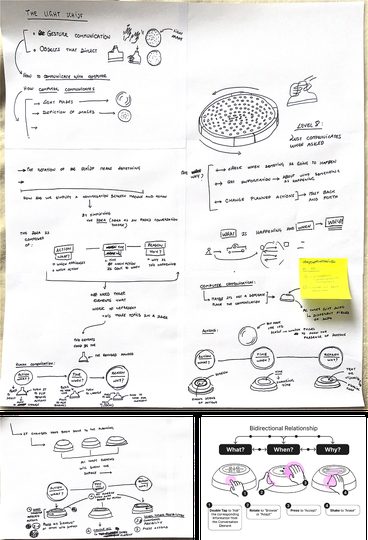
A hands-on mindset based on gathered knowledge drives ideation sessions through quick prototyping (, , , ), sketching, brainstorm techniques (, ), co-design sessions.
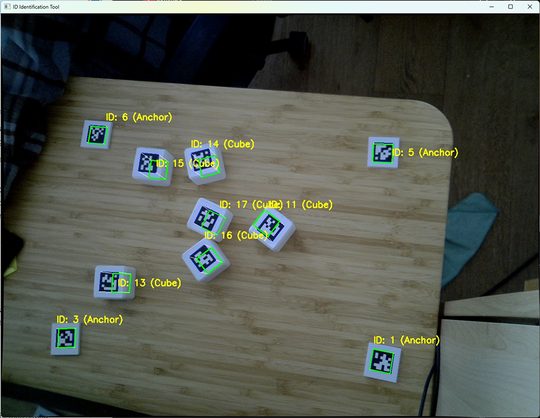
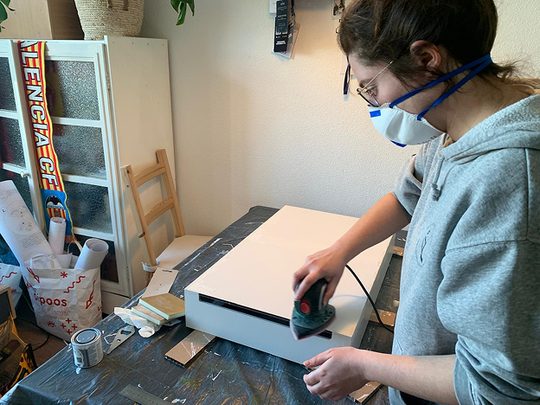
I translate concepts into tangible demonstrators using Figma (, , ), programming (, , , ), and fabrication tools (, , ) to integrate technologies such as Computer Vision (, ) and AI (). As well as using data to drive and be part of my designs not only as results.
I apply evaluation and analysis methods (, , , ) to gather and interpret qualitative and quantitative data about the demonstrator, informing my process and contributing new knowledge.
Strengths and Weaknesses
As a designer I am strong visually and conceptually in my designs and prototypes. I can lead my research process through various perspectives, this make me strongly innovative, but it also ties together with a weakness. I am a perfectionist with a tendency of scope creep, making designs too detailed or too extensive impacting the design process. I have become better at managing this and I have learned to let go a bit of my fear of failure, but it remains a growth area. I believe that by doing this, developing my technical skills further, reflecting and adjusting accordingly I can become who I want to become: a curious, open-minded HCI designer.
Design Academy Eindhoven
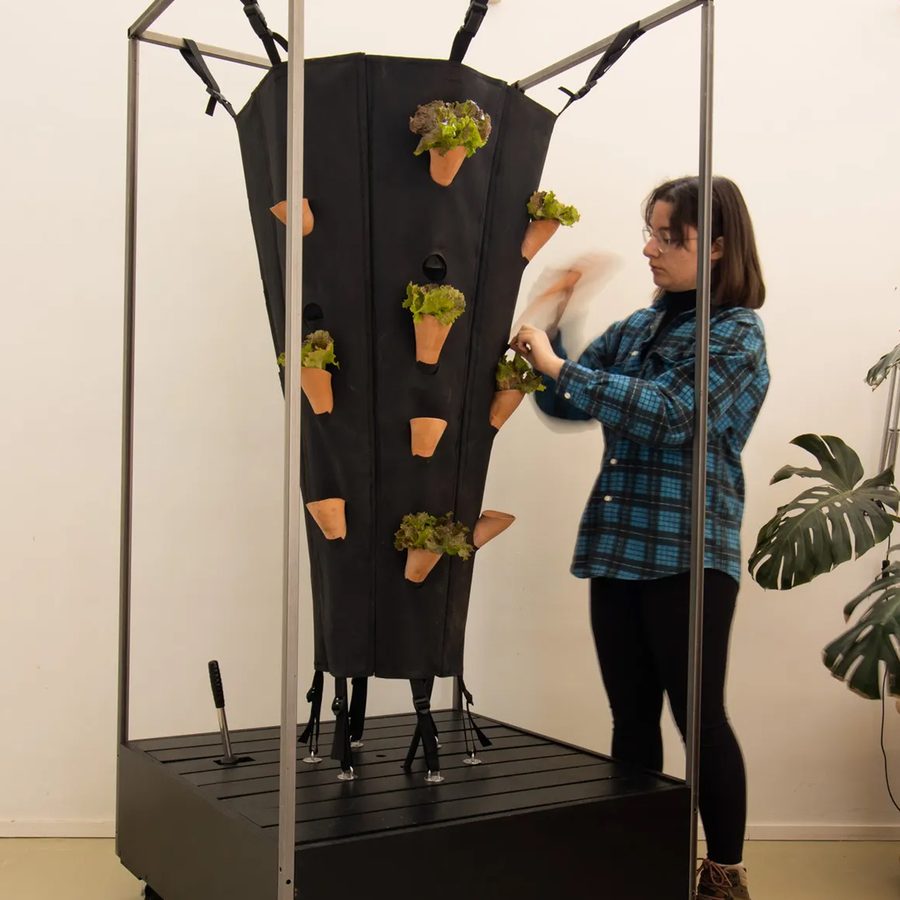
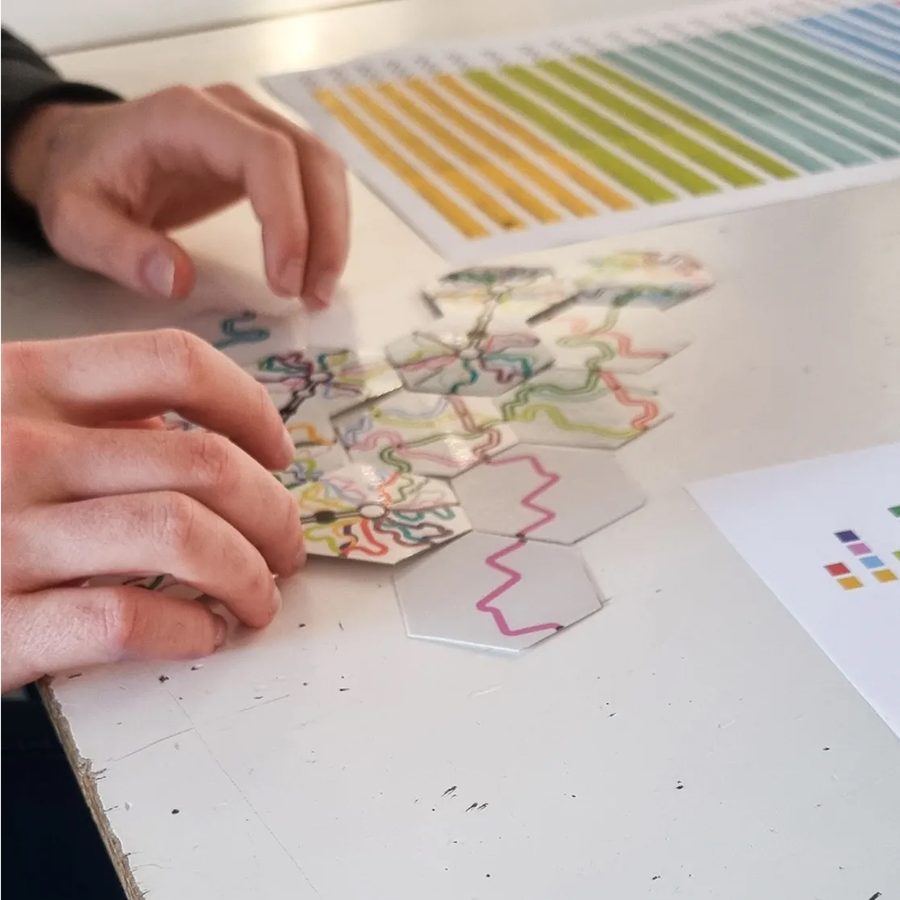
My foundation started at the Design Academy Eindhoven where I developed core competences in Technology and Realization and Creativity and Aesthetics. Working with wood, metal, ceramics and textiles provided a hands-on, instinctive approach: I learned to observe closely, let context guide decisions and trust in making as a form of thinking. What I lacked was the reasoning to explain and justify my decisions beyond my own intuition.
Pre-Master
This led me to the TU/e pre-master where I developed the methodological approach of my work, developing competencies in User and Society, Business and Entrepreneurship and Math, Data & Computing. Using research-through-design I learned to support projects with research and frameworks on top of just intuition. Lastly, I became aware of my own development and learned to reflect and take ownership of my growth.
Master
My master expanded my competences into a more holistic practice. I focused on User and Society, through courses (x, ), mentoring (), and projects (x, x, x), I learned to apply interviews, user testing, and probes, moving from sensitivity to informed empathy.
I also grew in Technology and Realization and Math, Data and Computing through prototyping (x, x, x), programming (x, x, x) and by treating data as both insights and design material (x, x), exploring machine learning, digital twins, and computer vision. Creativity and Aesthetics grew through methods like the Double Diamond and iterative sprints (x, x, x), turning my chaotic processes into structured one. Although not a specialism, Business and Entrepreneurship developed through mentoring (x), freelancing (x), collaboration and leadership with empathy and clarity. It taught me to guide teams, manage stakeholders and identify shared values (x). I applied what I was learning under real conditions (x, x), made decisions on my own and understood by doing. When I reached my FMP, I felt confident of my development in the expertise Areas, with B&E being one I knew would keep developing through practice rather than study.
Present
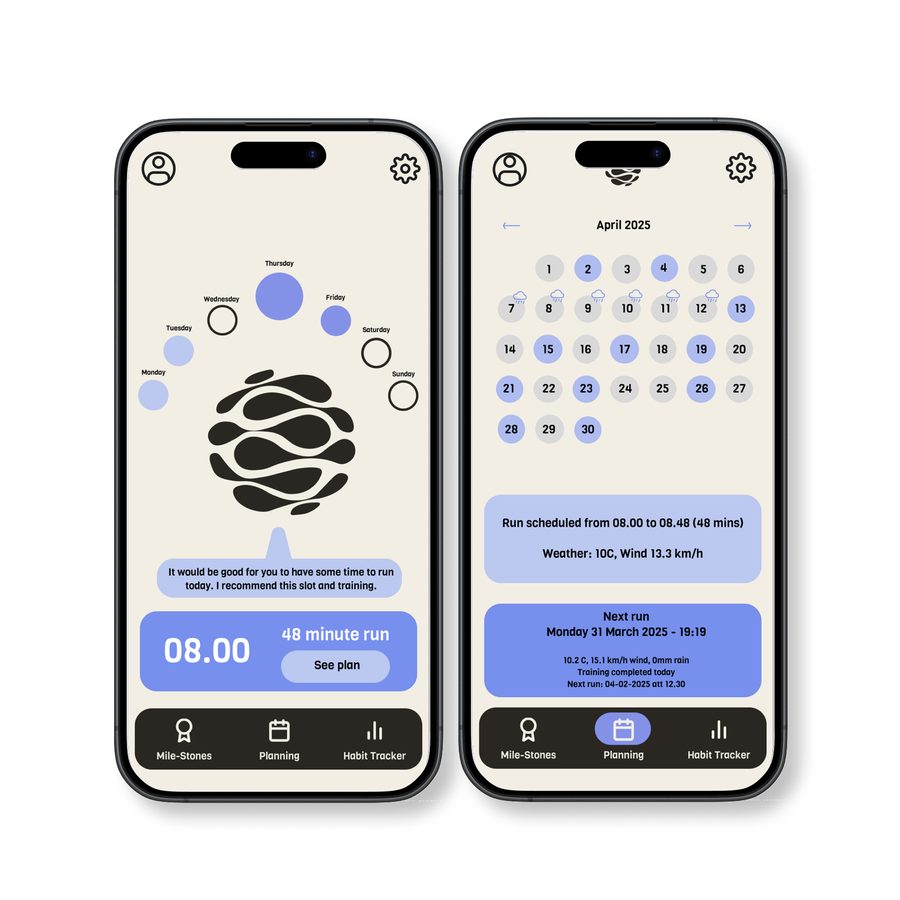
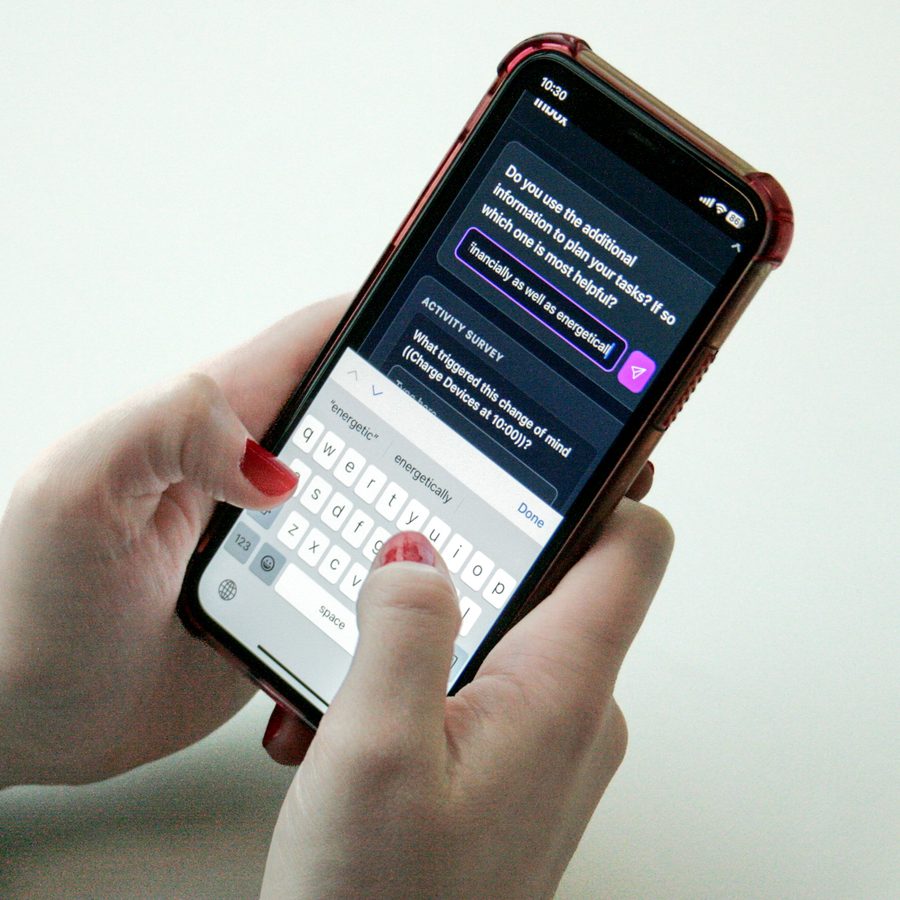
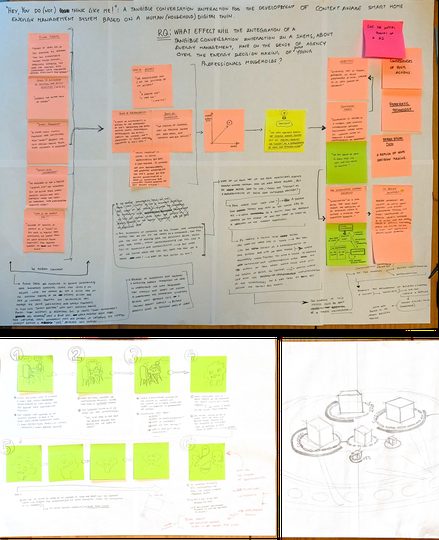
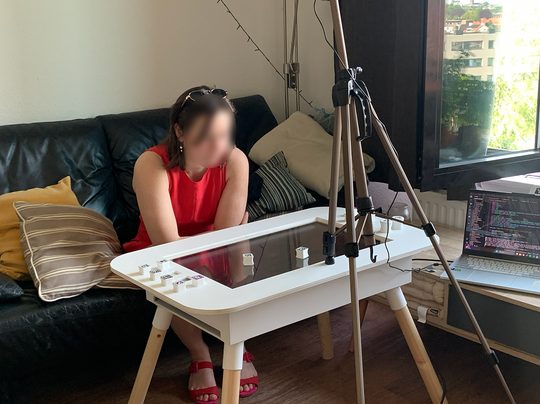
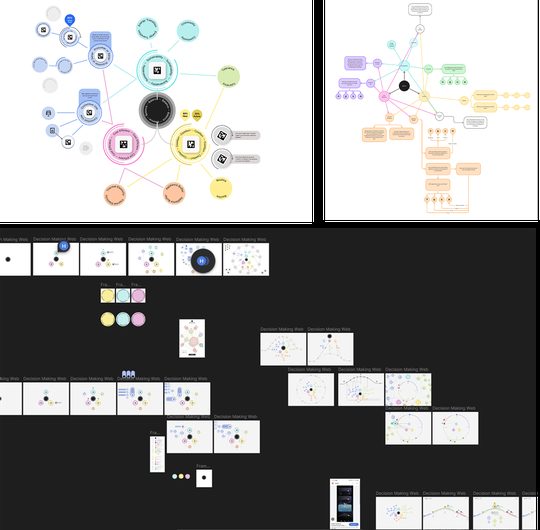
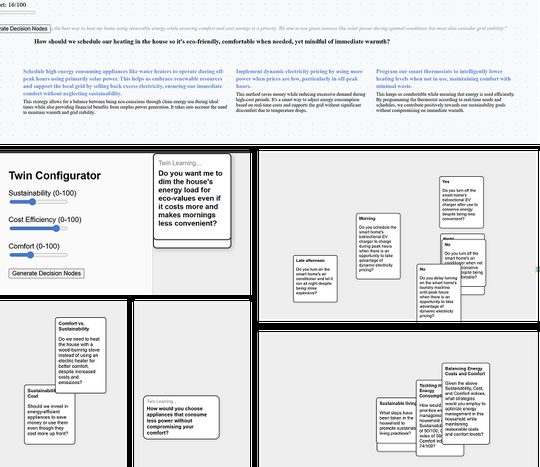
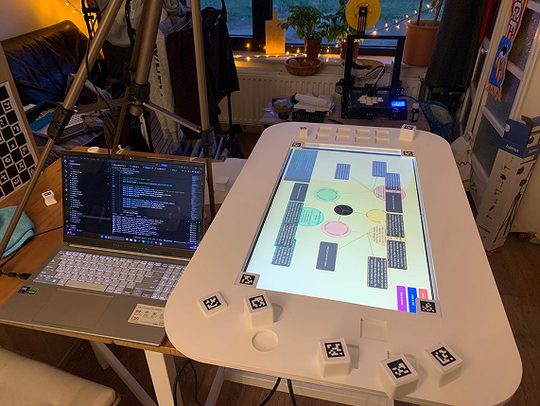
My FMP (x), designing a system in which a household teaches a Human Digital Twin (HDT) assisted Smart Home Energy Management System (SHEMS) about itself while the system learns to represent them back over time, illustrated my vision. I learned how the conversational nature of the process supported awareness and helped people voice their needs, reinforcing the role of actuators in the system. The HDT framing showed how a machine can improve its own understanding by learning from human context instead of replacing it. Seeing participants respond positively to representation compared to being optimised by a system confirmed that context-aware, no-size-fits-all solutions are a meaningful contribution to an overall system. It strengthened my belief and vision of the two-way value-flow between human and technology.
The FMP also confirmed who I am as a designer. What felt most like me throughout this process was the combination of exploratory, research-based thinking and a hands-on drive to build and bring things to life. The project was shaped from both directions at once: an outward curiosity that led me to seek different perspectives and build a network of stakeholders whose views informed my process, and an inward design intuition that pushed me to make, prototype, and realise ideas with my own skills. The research and hands-on approach is where I feel most like myself. This project showed me that I can lead and sustain that kind of process with little external direction.
Business & Entrepreneurship
Value Based Leadership (x) taught me how to think about design leadership by moving away from formal authority toward actions, behaviours and shared values for all stakeholders. Freelancing at Games for Health Europe (x) and my TA roles highlights this (x), developing my ability to communicate and defend ideas, manage priorities and to lead with empathy and clarity. My FMP showed this through the confidence and openness I had in stakeholder sessions, defining the value of the FMP, and the self-directed leadership across the process itself which helped me become a proactive and critical designer.
User & Society
Using UX Theory and Practice (x), Design for Behaviour Change (x), and Constructive Design Research I developed a toolkit of methods to involve different stakeholders through interviews, user testing (x, x, x, x), probes (x) and co-design (x). I learned to integrate them into studies to gather contextual and meaningful insights. In my FMP I applied this in two stages: the exploration phase with semi-structured interviews with stakeholders, co-design sessions, and an evaluation phase with both users and expert interviews. It is the competency that guides me most. I have learned to look for multiple viewpoints before making design decisions, involving stakeholders across every step.
Developed a grounded intuition guided by gathered insights, helping me ideate solution that contribute value to all stakeholders.
Creativity & Aesthetics
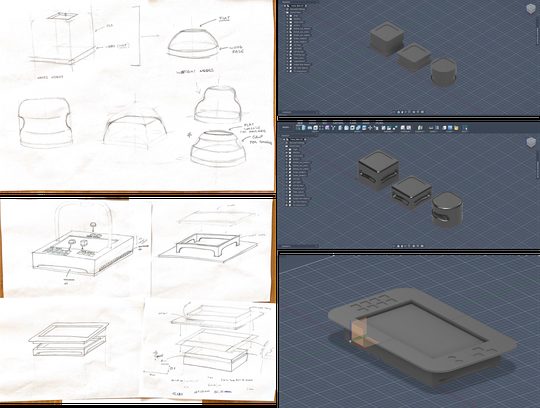
My aesthetic strengths originated from my bachelor and this master taught me to be critical on top of instinctive. By using iterative project processes (x, x, x), I learned to ask why I make the choices I make. This led me to a structured ideation process with the understanding that aesthetics are not only visual but multimodal. The form itself carries meaning. In my FMP this showed in the ideation and design phases, drawing on UX design, UI design, graphic design, Figma, sketching and physical prototyping. I am confident in my creative instincts but also have critical perspective to question them.
Learned combining user involvement with quantitative and qualitative methods of data elicitation and analysis to extract meaningful insights.
Developed further translating concepts into working demonstrators by connecting my designer intuition and my knowledge and skills in integrating technology.
Math, Data & Computing
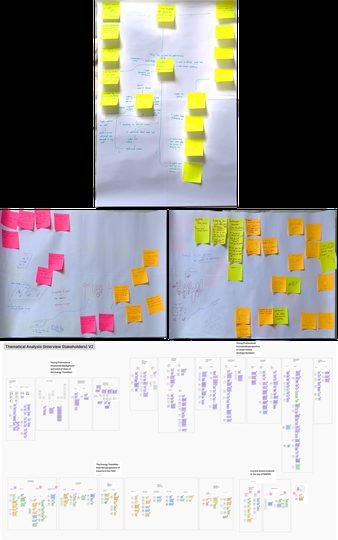
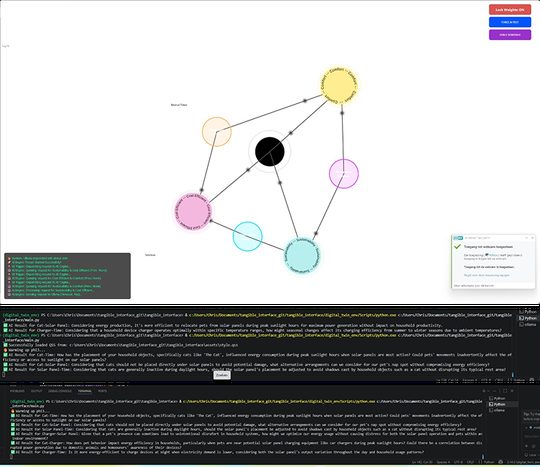
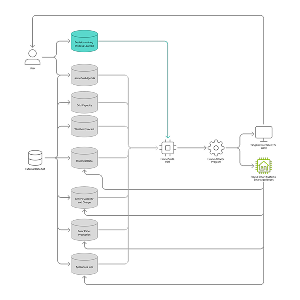
This area grew the most during my master. Through LIVID (x) and the TPP project (x), I learned to treat data not only as information but as design material. I built confidence with statistical analysis, thematic analysis, and data visualisation with Python (x, x). My course and semester courses (x, x, x, x) helped me develop hands-on programming skills with Python, JavaScript, CSS and HTML. My FMP reflected these competences in its system architecture consisting of data flows, system charts, an implementation of a LLM and computer vision. Furthermore, it showed in the evaluation where I analysed both quantitative and qualitative data, to contribute a meaningful insight. This EA open a new side to design, that I will like to keep on developing.
Learned to treat data as design material connecting the physical to the digital world, to integrate advanced technologies such as AI and Digital Twins.
Technology & Realization
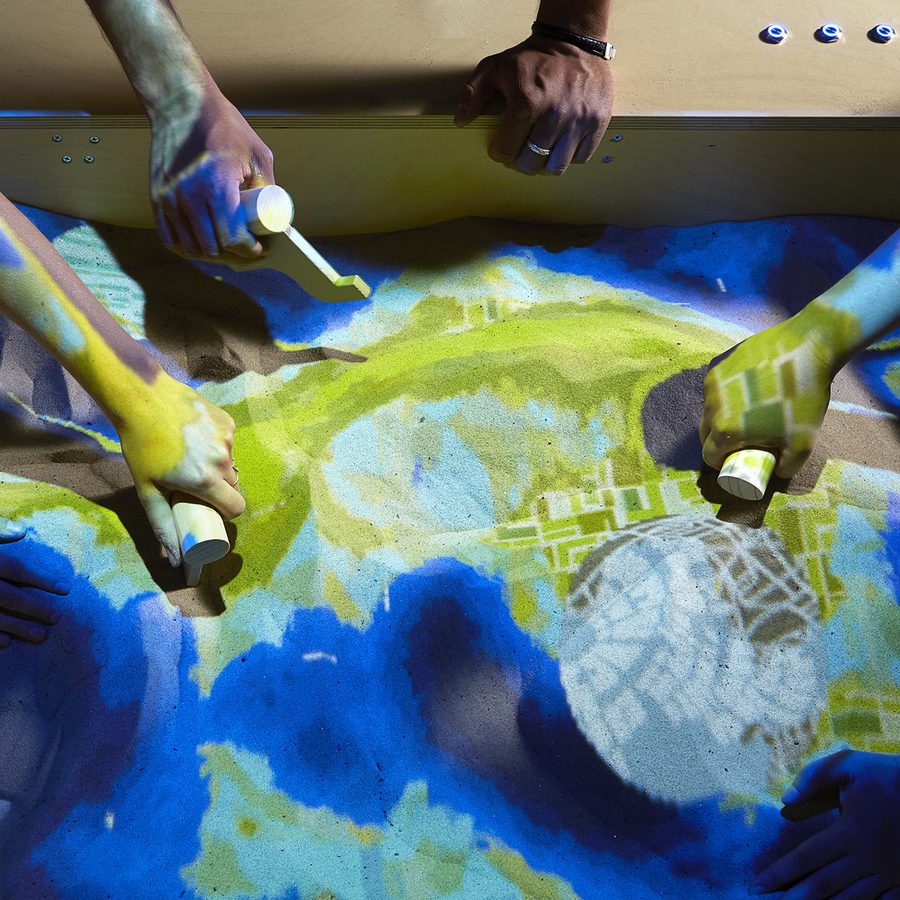
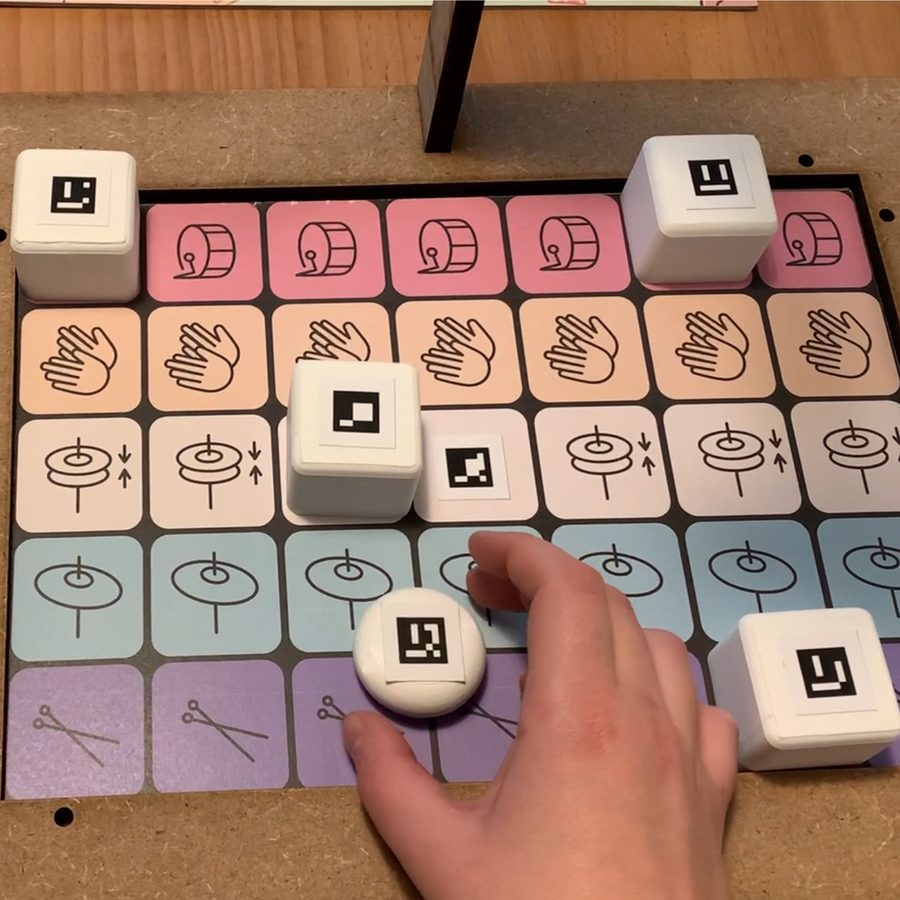
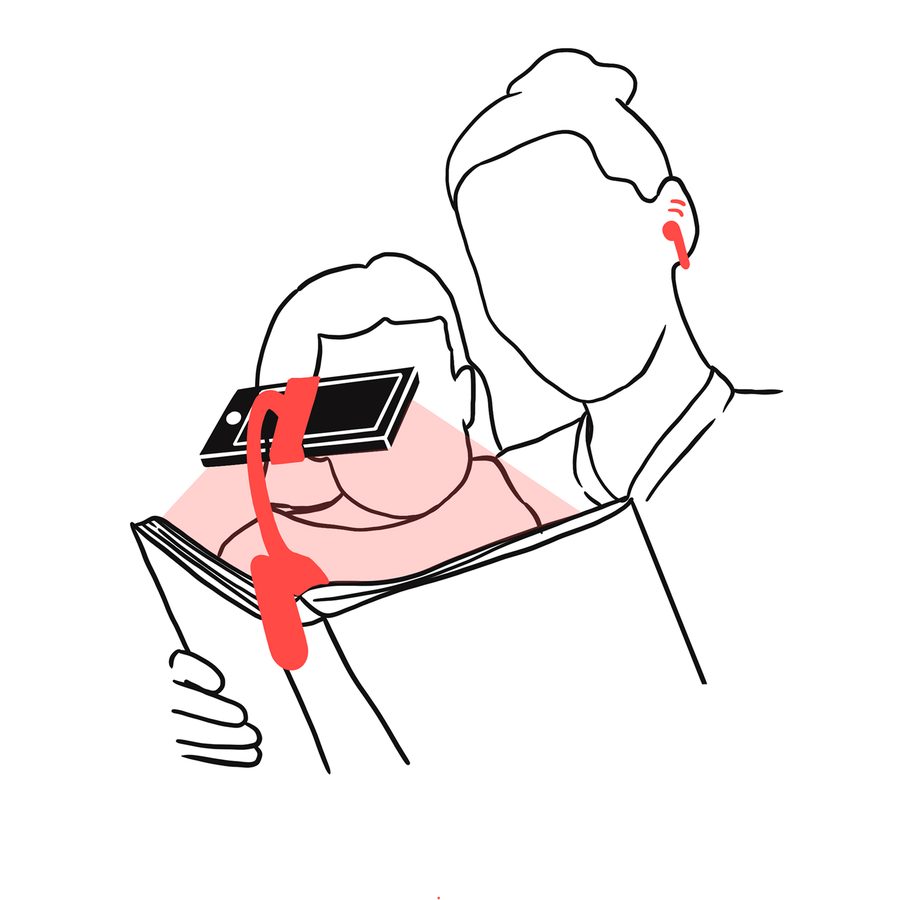
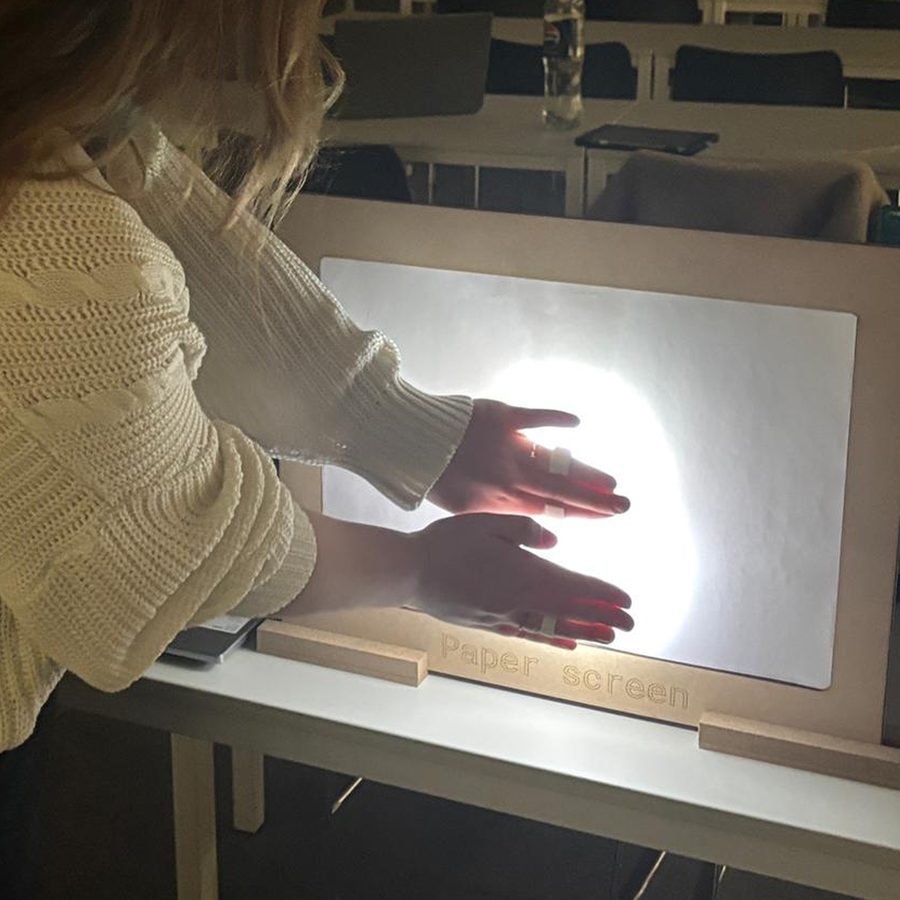
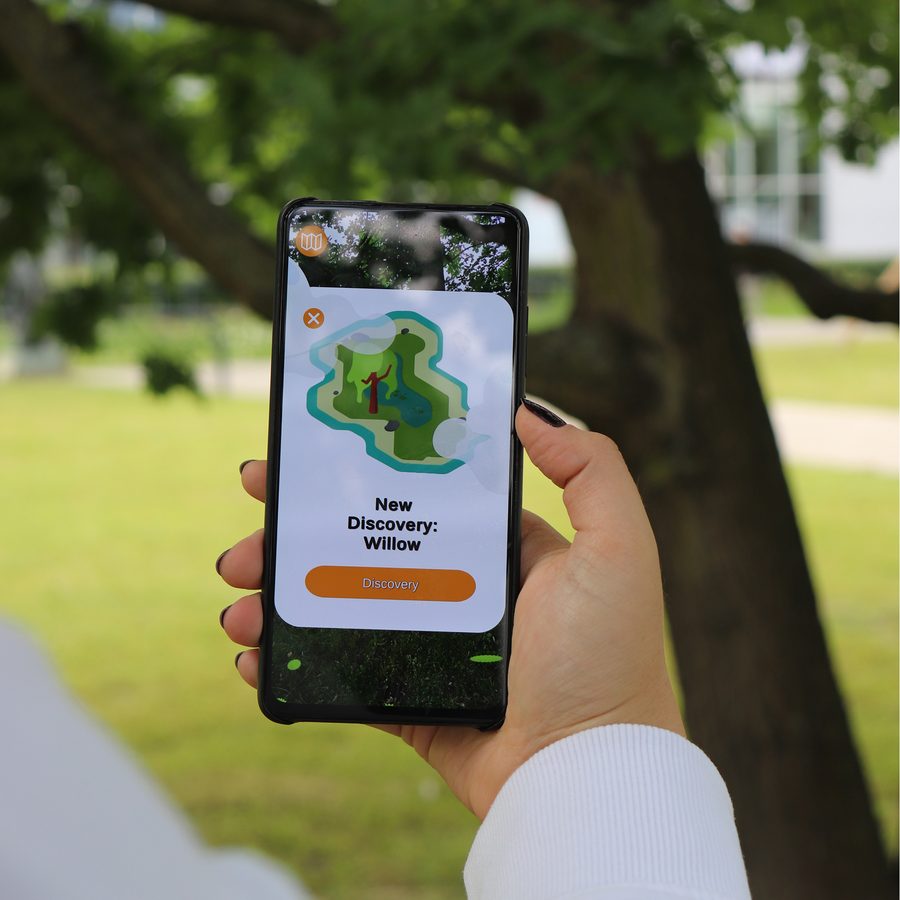
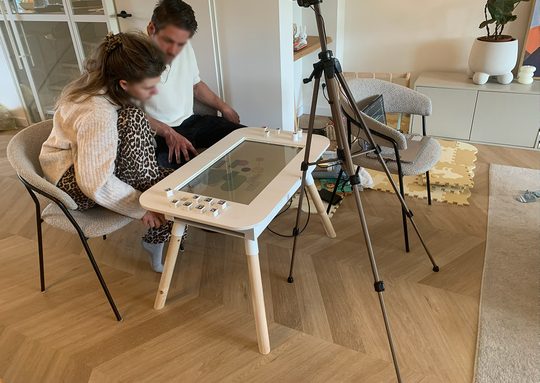
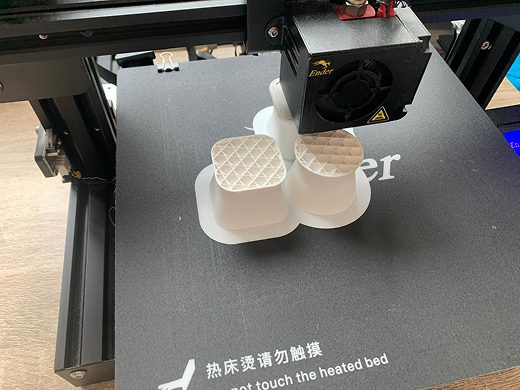
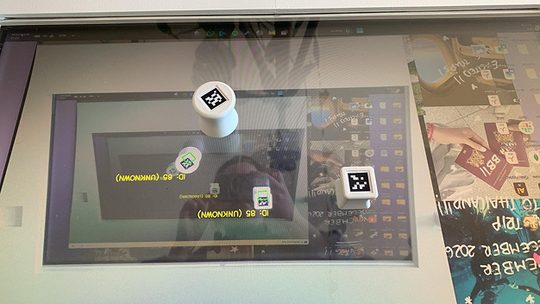
Doing the Interactive Book and Paper Screen projects I discovered a passion for Human-Computer Interaction and post-WIMP interfaces (x, x), especially tangible interaction and computer vision using fiducial markers. The LIVID (x) and TPP projects (x) helped me understand Human Digital Twins, capacities and limitations. In my FMP, these competences resulted to the Tangible Conversational Interface: fiducial markers used for a physical configuration system with a LLM serving as an emulated HDT. Physical fabrication was done through 3D printing, laser cutting, and material construction skills developed in previous education. I can now translate concepts into testable artefact and have room to grow technically.
Professional Skills
During my master I developed all five professional skills that supported the EA competences. My communication and scientific skills grew through TA roles (x), PhD preparation during the TPP project (x), and the research writing of research projects (x, x, x, x). Cooperation developed throughout freelance and project work. I learned to lead building trust and understanding across different projects (x, x, x, x). Organising and planning were tested with balancing client deadlines (x) and courses (x, x), running sprint-based project cycles, and managing the timelines. Reflecting is my most important skill, treating it as a design tool to correct my approach proactively instead of just at the end. Through these competencies I was able to direct my FMP, planning using a Gantt Charts, communicating with stakeholders, reporting and presenting my work during interviews and DemoDay.
Overall Growth
The most significant growth is as a designer who leads her own process. I have always had strong design intuition, but this master gave me the ability to ground that intuition with structure. I use second-person perspectives with stakeholder involvement and third-person perspective through literature making my instincts informed and grounded.
What surprised me most was discovering how much I genuinely enjoy research. The process of building studies, involving people, analysing, and letting it guide my designs is something that I can do and want to keep doing. It showed me that research has become part of who I am as a designer.
At the same time, I know where I am still growing. My perfectionism and tendency toward scope creep are something I still actively manage. Technically, I want to keep developing in Math, Data and Computing and Technology and Realization to build prototypes that are more sophisticated and robust for users. Overall, I want to keep developing my ability to think across the full post-human system and see more clearly and intuitively how people, technology, and nature connect, and what design, and I, can do at those intersections.